


The word esoteric has always been a favorite of mine. To be sure, it is pretty fun to say, but most of my enjoyment of the word comes from the way in which its definition and common usage square almost perfectly with one another. When a person refers to a thing as esoteric, you have a very strong idea of what they mean and why they are saying it, even if you may not know what the concept or object they are referring to is exactly. Esoterica is the way it is because it’s intended to be: made for a smaller audience, by choice and design, not by circumstance and chance.
On the other hand, obscurity is an idea more broadly defined and a word often used with the implication that what’s being labelled as such has sat in plain sight waiting until it catches the eye of the right person or group. Of course, it can (and usually does) mean that the shit’s also just plain weird (complimentary). It’s in this overarching idea — putting weird things in front of the right people that they may have otherwise missed — where you’ll find the kind of things that we cover for this website/newsletter.
The obscurity of something is also largely determined in the eye of the beholder. Which is why we (myself [Nick Bond] and Brad Hill [my podcast co-host and co-conspirator/fellow obscure sports enthusiast]) wanted to start off the entire enterprise by exploring what we mean when we say something is “obscure sports america”-worthy. For us, the basis by which we determine obscurity is much more about a vibe than some kind of concrete ideal (and something that we spend what feels like an unhealthy amount of time thinking about and discussing).
Which is a kind of long-winded way of saying this: something in sports being obscure enough to appear in our newsletter about obscure sports doesn’t necessarily mean the sport it came from would be considered obscure by any reasonable measure. That’s because we don’t want to simply cover sports that are obscure but the events/groups/leagues/championships in sports that nobody knows about, even when they are part of a sport that everyone is always talking about. So, for instance, while (association) football is the least obscure sport on earth, that won’t stop us from covering things like the Oceanic Football Confederation Professional League (OFC Pro) which is not something we made up for illustrative purposes, but is, in fact, the first pro (association) football league in Oceania’s history.
In these scenarios — obscure enclaves of a sport that would be considered “major” for any number of reasons, including possessing a meaningful international footprint — our goal will be less to “cover” those leagues in a traditional sense, than to track and disseminate information about the parts of those sports that reach the farthest corners of the globe. We’ll do so, for the most part through weekly updates to league tables and posting schedules for seasons and tournaments, as well as serving as an information clearinghouse for their schedules and streaming homes and in a weekly portion of the newsletter we’re calling What We’re Watching this Week wherein we provide you with a curated list of what we plan on watching this week, when it will be on and where you can find it streaming.
On the other end of the obscurity spectrum, what we will be covering more traditionally — both in longer write-ups like this (when warranted) and as part of our round up of stories from The Wide World of Obscure Sports — are best described as “niche” sports, and specifically those tied to a specific region or culture. Finnish baseball (or pesepallo,) lacrosse (both box and field) and curling would all fit in this category. They matter where they matter — like lacrosse on Long Island, where Brad and I grew up1 — but even if you grew up in the next state over from where it’s considered a way of life, you may barely know that the sport exists and even if you do, might not consider it a “real” one.
In this space, though, all sports are “real” and worthy of being treated with respect, especially with regards to how we talk about their fans and players, though probably not the owners2. Sports, as defined by us, basically only require at least one competitor challenging another competitor, time or goal/standard.
Cornhole? Sport. Chess Boxing? Double Sport. Wife-carrying? It’s in our logo!
Along these same lines are what we call “variations on a theme”-style sports, which range from versions of a more popular sport that developed in parallel to their better-known cousins, like squash, something with an interesting twist on a very established idea, like ice American football, or a sport that relies on emergent technology to reimagine what’s possible in its existing framework, like The Golf League does with indoor simulations.
Now, it would be crazy to claim that we’re going to be able to dedicate the same amount of resources or space to cornhole or wife-carrying as we do curling, as there’s just not enough there there; but if you see them talked about around here, you shouldn’t be surprised.
What you should be surprised by, however, is if you see us writing about what we’ve come to call “game show sports”. Things like shopping cart return or pretzel cutting competitions — which occasionally make the rounds on social media (often with captions like “I should be sleeping but instead I’m betting on…”) — aren’t the kind of contests we’ll be covering around here. Conceptually, activities like this definitely have a place in our big tent of weird sports, but without any kind of consistent competitions or recognized governing bodies, there just isn’t anything to “cover” and we’re not going to waste our time scouring social media to chase stories that don’t exist.
And that’s not because they aren’t “sports,” but because they aren’t “real”. Which is to say, while they are things that have obviously happened, nearly all of these kind of clips come from a single German game show series called Schlag den Star (or its British counterpart, “Beat the Star”) that specializes in these sort of weird one-off events. Most of us don’t know that because we’re Americans and Americans, by and large, do not know much beyond what’s happening directly outside their windows, especially when it comes to sports and entertainment.
Which brings us to the last bit of criteria, and the one that essentially combines all the others: whether or not the average American would be able to tell you anything about a sport or league, from the rules to the participants to the kind of competitions involved. If your neighbor doesn’t know who or what all is involved in an athletic endeavor, there’s a pretty excellent chance we’ll be talking about it and probably a lot.
That extends to things happening right under our feet (or in our neighborhood,) like the United Soccer League Championship (USLC): A relatively recent addition to the long list of (association) football leagues across the world, it’s a domestic soccer organization that exists entirely outside the MLS superstructure that has begun to monopolize much of American soccer development (and even includes promotion and relegation, the way The Football Gods intended).
This is the bucket in which you’ll also find some of our personal favorites, like cricket (the bat-and-ball sport,) rugby (the football and tackling sport) and darts (the dart and dartboards sport). We love them so much that they3 were the catalyst for coming up with this newsletter in the first place and will likely be the few sports that warrant cover week-to-week.
In fact, specific to darts, while every other sport on earth will be covered by us based entirely on their newsworthiness in a given week, each newsletter (except for this one) will end with what we’re going to call DISPATCHES FROM DARTY PARTY, USA. Which will provide a brief update on what we’ve talked about in that week’s episode of the titular podcast, usually accompanied by a visual aid like an interesting chart or exciting graph4.
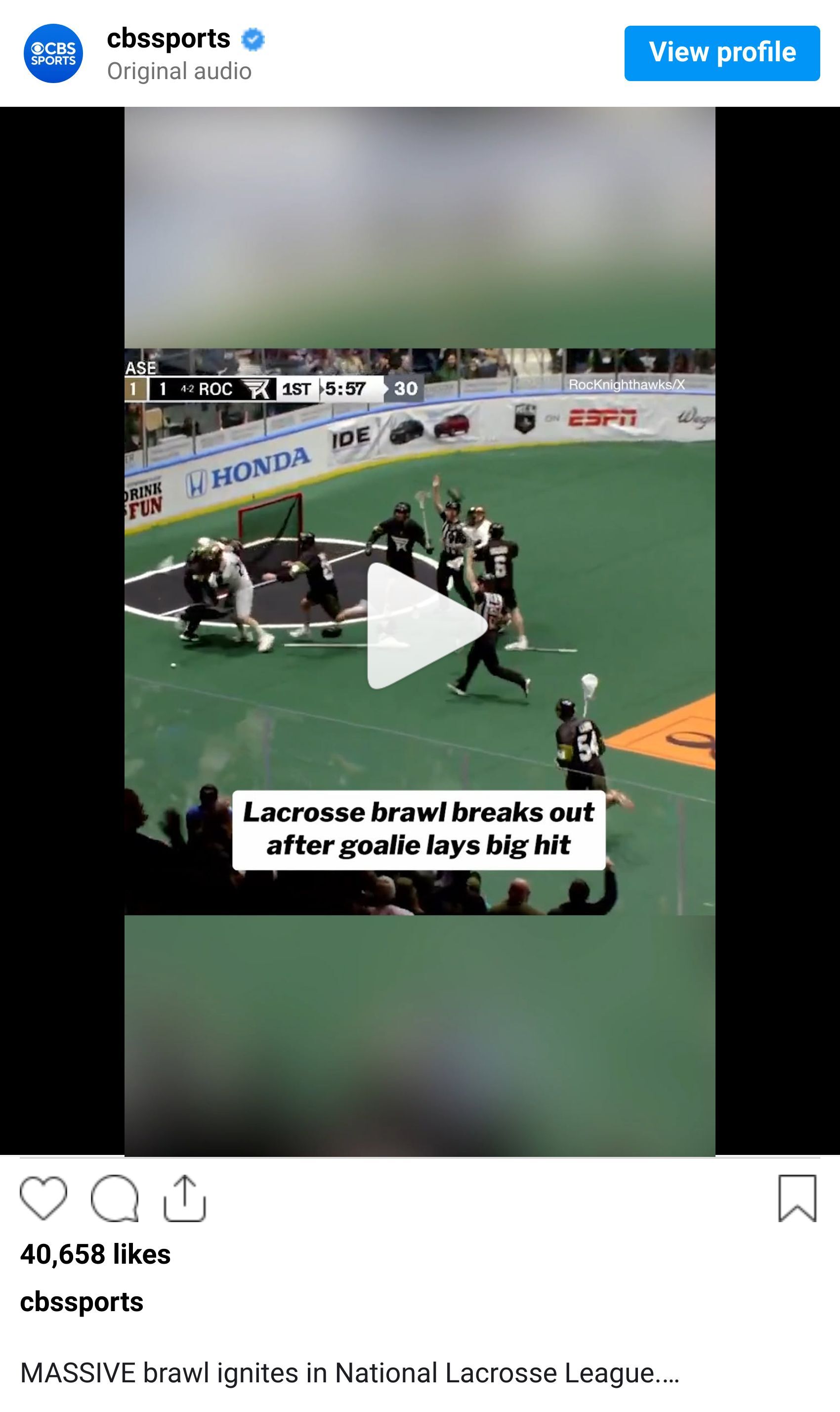
For now, though, we’ll leave you with this (according to Brad, totally legal!) hit by a lacrosse goalie on an unsuspecting defenseman:
1 And where Brad developed into a D1 defenseman who was eventually recruited to play West Point, which he did for a very brief period before he realized that he didn’t want to be shot at by rubber balls and/or live ammo (okay, actually it was very specifically the live ammo part). Anyways, expect way more talk about Premier Lacrosse League than you might have been anticipated originally.
2 “‘Labor is entitled to all it creates’ - David Ricardo” - Nick Bond
3 Along with lacrosse, because Brad.
4 Nothing says “fun” like Darts and Graphs!